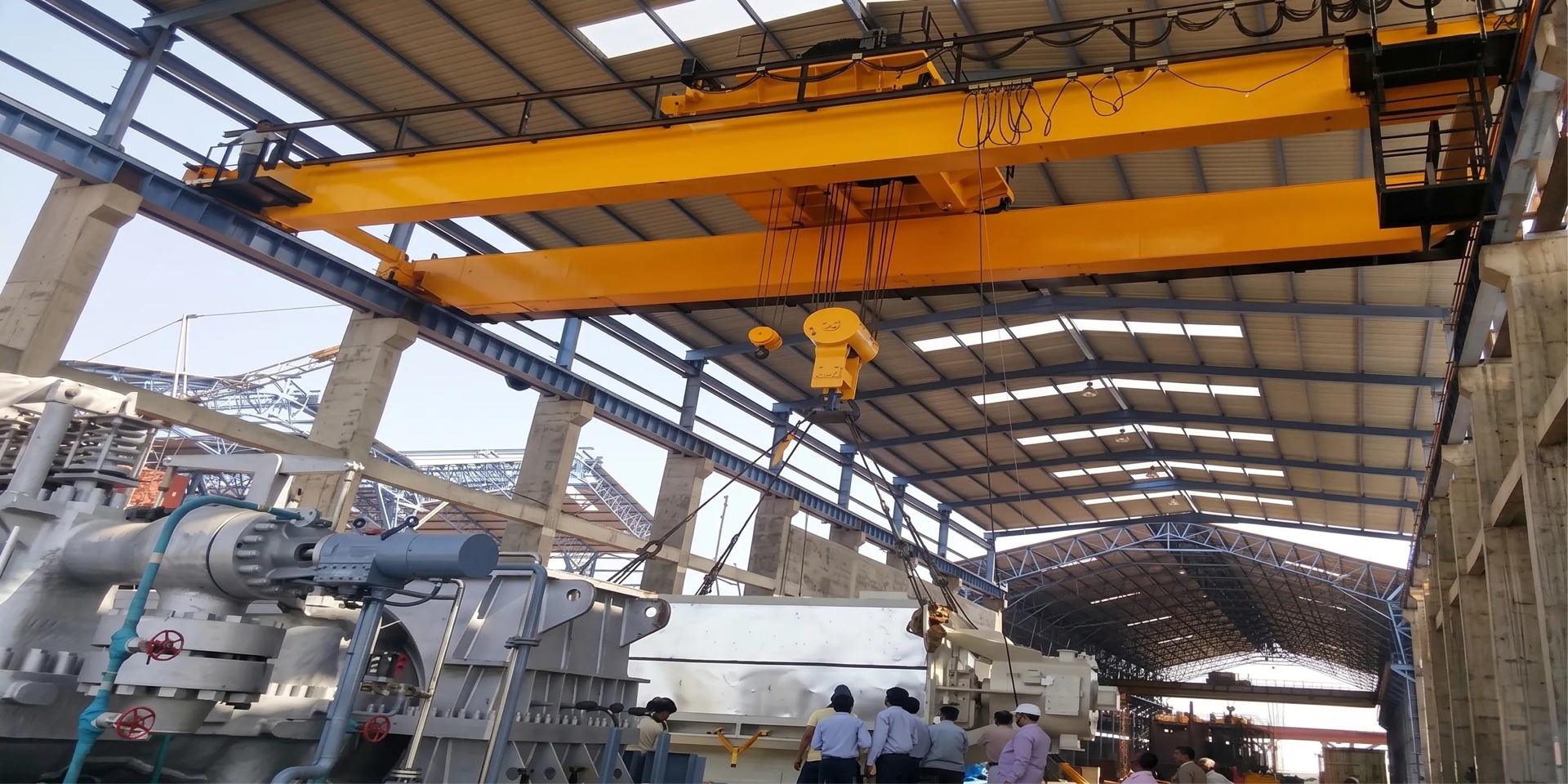
40 MT double-girder
EOT, cement
clinker bay.
A 40-tonne double-girder bridge with twin-trolley arrangement for the clinker yard of a Maharashtra cement plant — 26 m span, duty class A7, with abrasion-resistant linings and dust-sealed cylinders for round-the-clock operation.
Clinker dust,
continuous duty,
and a 26-metre bay.
In 2022, a cement plant in Maharashtra needed a new crane over its clinker yard. Clinker is one of the harder duties in Indian heavy industry: the material is hot from the kiln line, heavily abrasive, and the dust it sheds works its way into every unsealed bearing, cylinder and electrical enclosure in the bay.
The duty pattern left no allowance for rest. A cement kiln does not stop, so the yard that buffers its output cannot stop either — the crane had to be rated for genuine 24×7 operation, not a day-shift machine asked to work nights.
The bay itself set the structural problem: a 26 m span at 40-tonne capacity, with a handling pattern across the yard that a single central trolley would serve poorly. The plant needed capacity where the material was, at both ends of a long bridge, around the clock.
Project
specification.
| Location | Cement plant, Maharashtra |
|---|---|
| Year | 2022 |
| Equipment | Double-girder EOT crane, twin-trolley arrangement |
| Rated Capacity | 40 MT |
| Span | 26 m |
| Duty Class | A7 |
| Application | Clinker yard — hot, abrasive bulk material |
| Wear Protection | Abrasion-resistant linings at clinker-contact surfaces |
| Sealing | Dust-sealed hydraulic cylinders for the clinker-dust environment |
| Operating Pattern | Designed for 24×7 continuous duty |
Designed for the
dust, not just
the load chart.
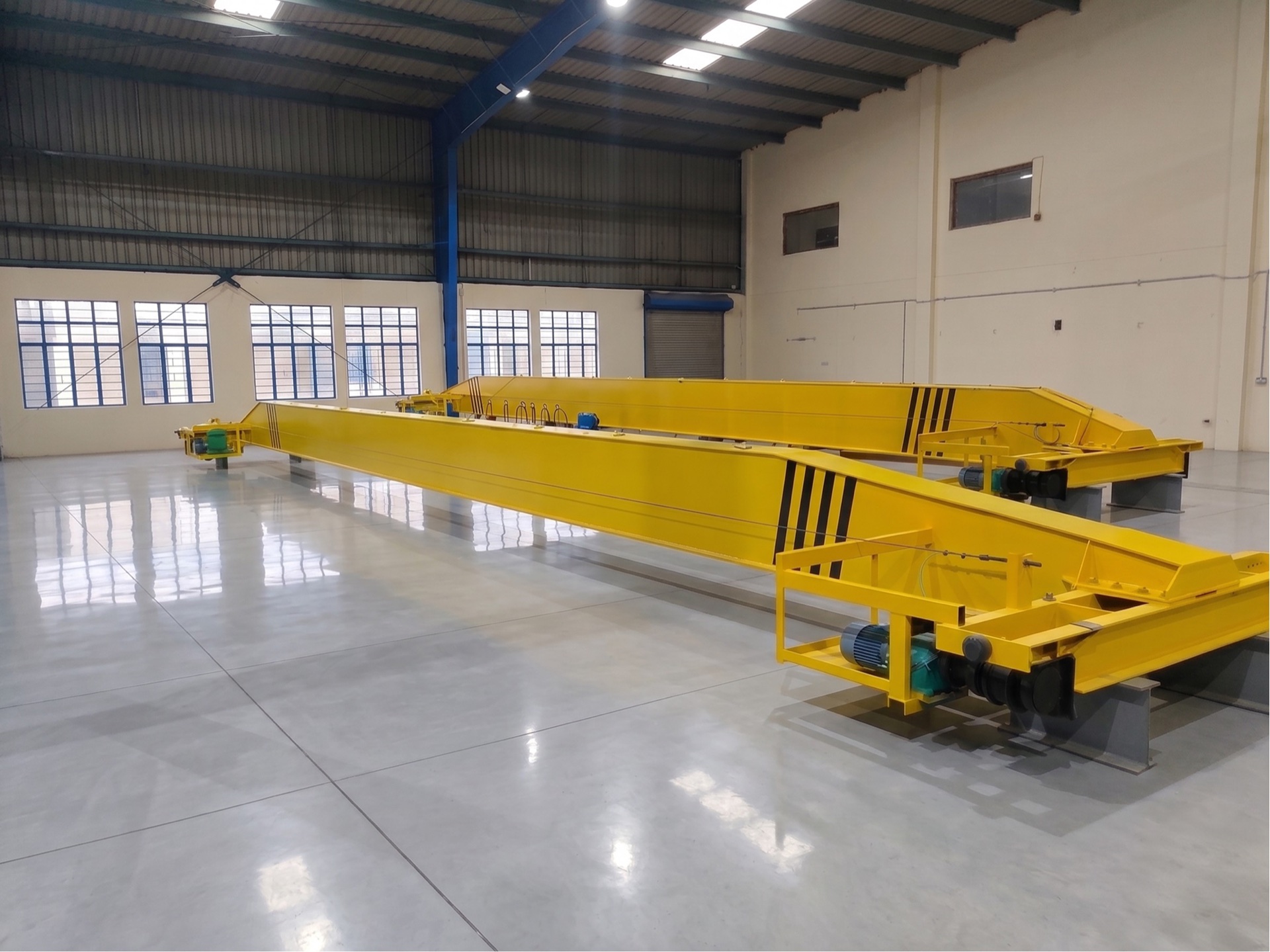
- Twin-trolley arrangement on one bridge. Two trolleys on the same double-girder bridge let the plant work both ends of the 26 m bay without waiting on a single hoist to traverse — cycle time in a clinker yard is set by trolley availability, not bridge speed.
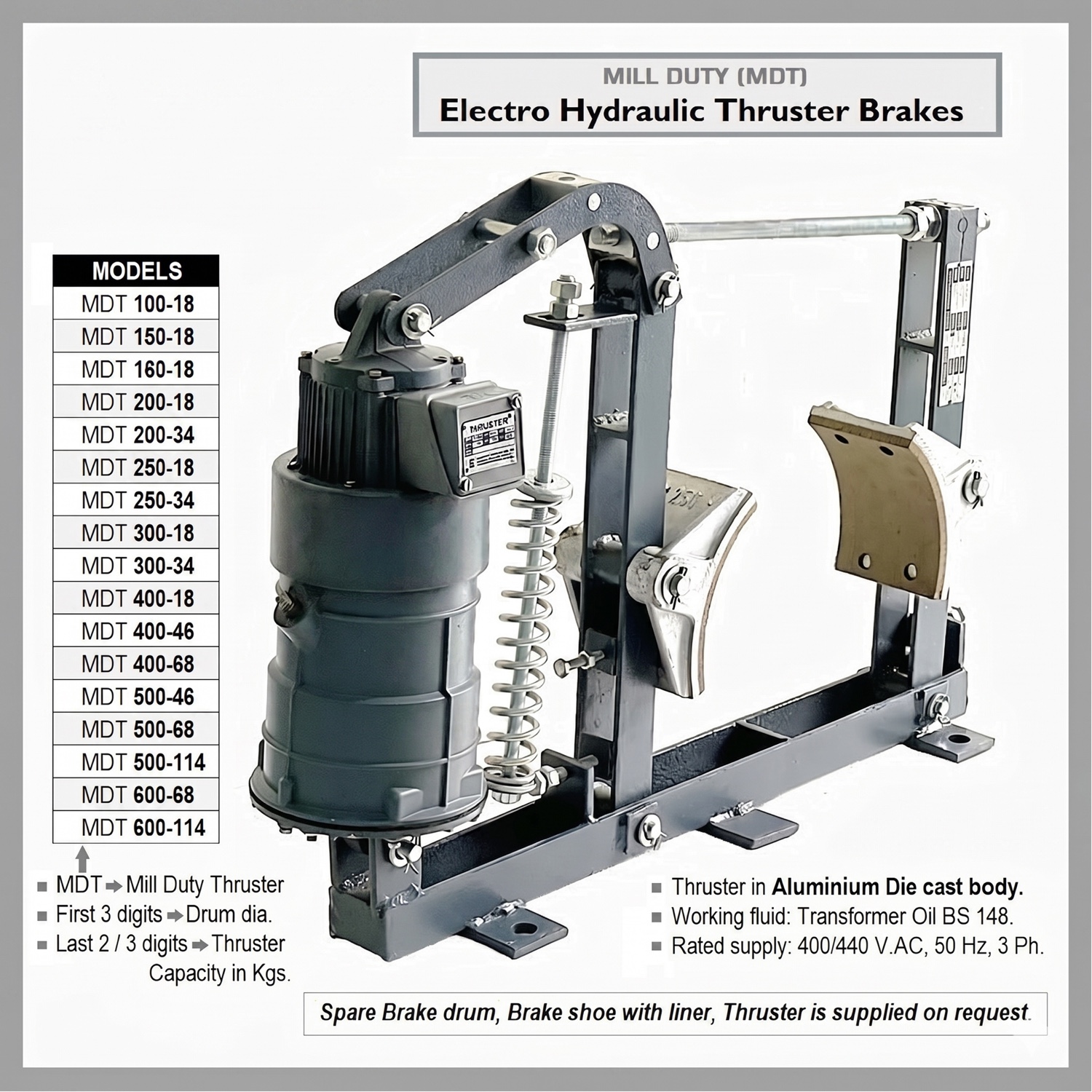
- A7 duty class throughout. Structure, mechanisms, brakes and motors were all rated to A7 — the class appropriate for near-continuous cycling — rather than up-rating a lighter-duty design. In 24×7 service, the duty class is the design, not a label.
- Abrasion-resistant linings. Every surface in regular contact with clinker was lined with abrasion-resistant material, treating wear plates as a replaceable consumable instead of letting the parent structure erode.
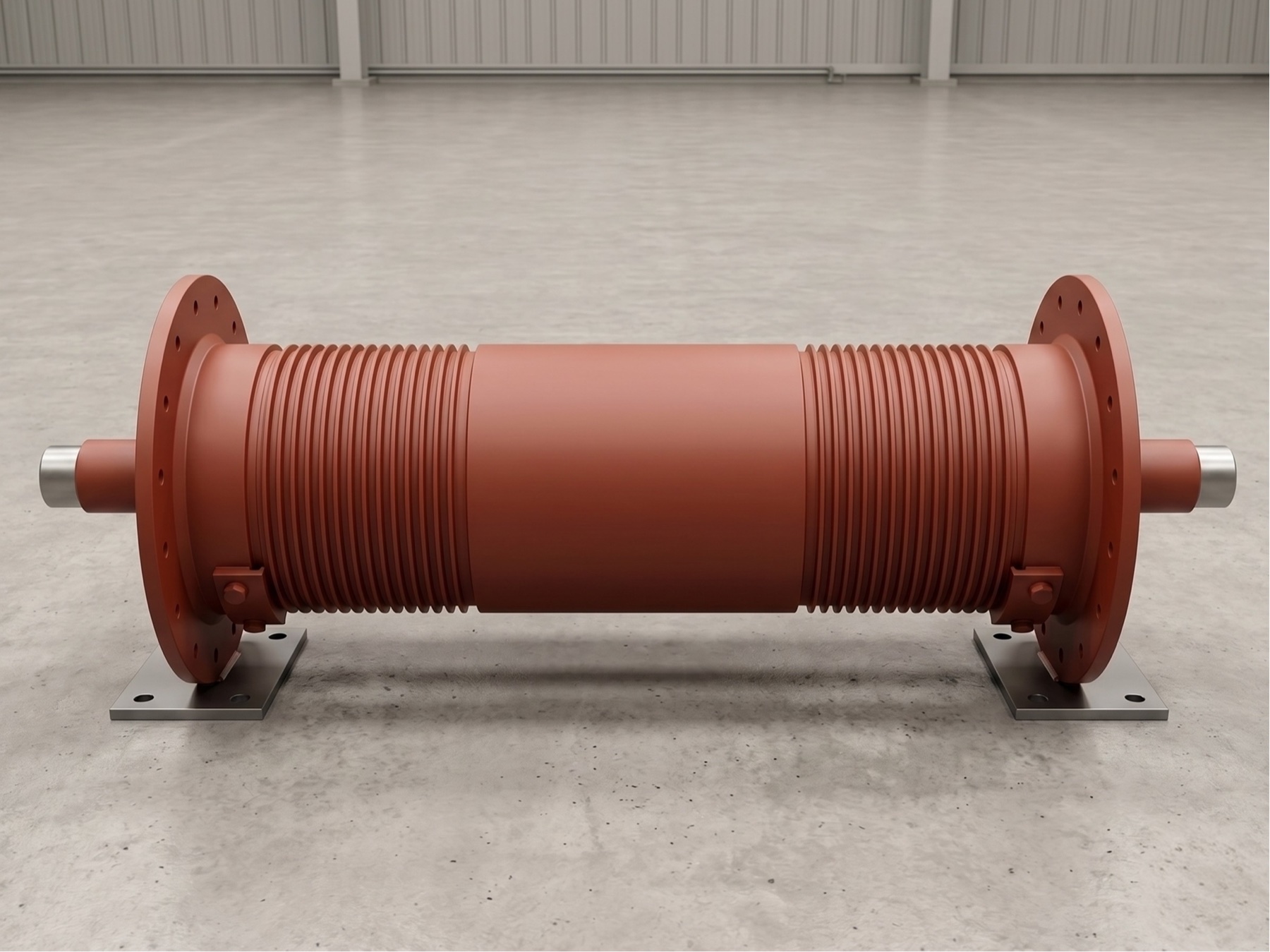
- Dust-sealed hydraulic cylinders. Clinker dust destroys standard cylinder sealing. Dust-sealed cylinder construction was specified so that the hydraulic elements survive the environment they actually work in, not a clean test bench.
- Maintenance planned at design stage. On a crane that never gets a natural shutdown, service access and component replaceability were laid out at the drawing stage, so that the short maintenance windows a cement plant does get are enough.
A clinker crane
that works the same
shift as the kiln.
The crane was delivered, erected and load-tested for the plant's clinker yard and entered round-the-clock service. The twin-trolley arrangement gives the yard two working hoists across the full 26 m span, and the wear linings and dust-sealed cylinders address the two failure modes that shorten crane life in cement service.
The unit remains in continuous operation, maintained through the plant's normal short-window shutdown schedule.
The crane and its components.
Have a similar
duty cycle in
your plant?
Share your span, capacity, duty class and environment — dust, heat, outdoor exposure. Our engineering team will size the crane to the duty it will actually see.