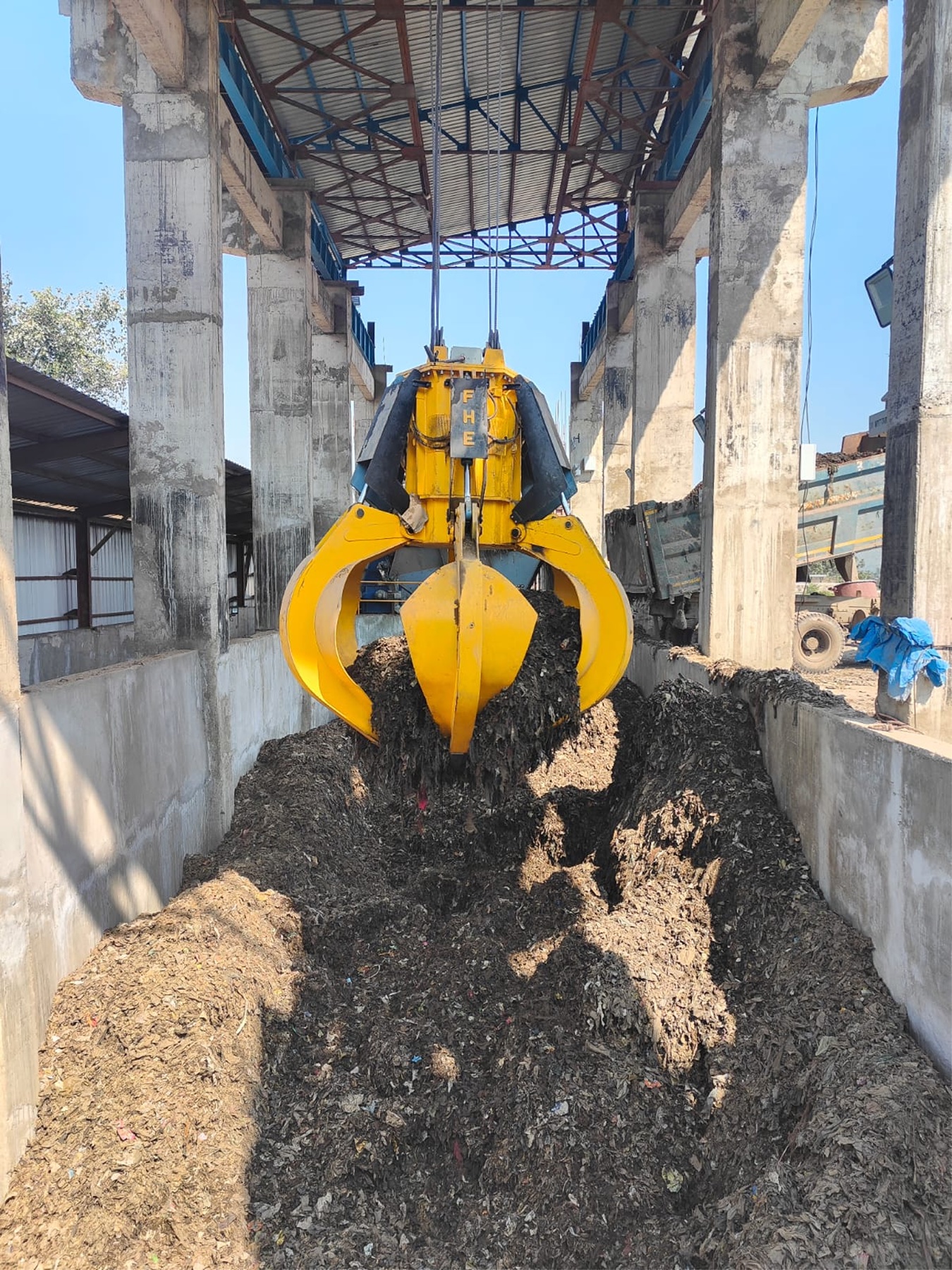
Scrap handling grabs
that keep the material
moving.
Orange peel and clamshell grabs for ports, scrap yards, shipbreaking and recycling lines — marine-grade hydraulics, abrasion-resistant Hardox tines and shells, sized to your crane and your material, and built at our Kundli, Haryana works.
Irregular material,
salt air, and a demurrage
clock that never stops.
A port berth or a recycling line is priced by throughput. When the grab is the bottleneck — half bites, slow closing, a cylinder down — the cost shows up immediately as demurrage at the quay or starved shears and shredders in the yard.
The material itself fights back. Scrap is irregular, interlocked and abrasive; a grab must penetrate the pile, close through obstructions and hold a full bite without bending tines or springing pivots. Bulk cargo flows and packs differently again. And the environment — salt atmosphere at ports, dust and shredded fines in recycling — attacks cylinder rods, seals and pins around the clock.
We build grabs for exactly this duty: Hardox tines and shell edges, hard-chromed rods with marine-rated seal packages, oversized greasable pivots, and closing force calculated from your material rather than a catalogue average. Every cylinder is pressure tested to 1.5× working pressure before the grab ships, and every grab is matched to the crane or handler it will hang from.
Grabs and the hydraulics
behind them.
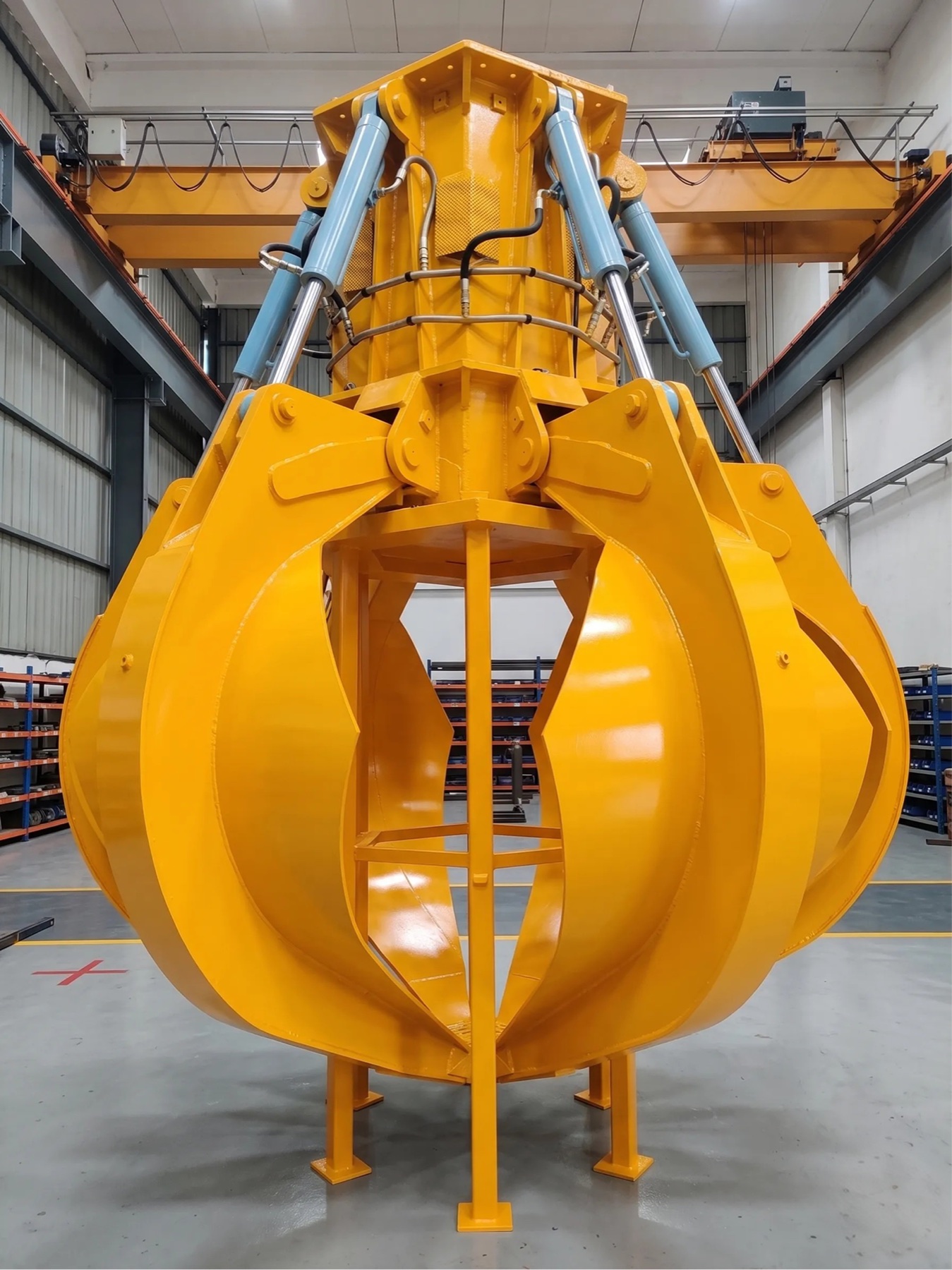
Orange Peel
Grabs
Multi-tine grabs for ferrous and non-ferrous scrap, MSW and shipbreaking — four to six Hardox tines, rope-suspended or handler-mounted, with closing force sized to the pile.
View Orange Peel Grabs →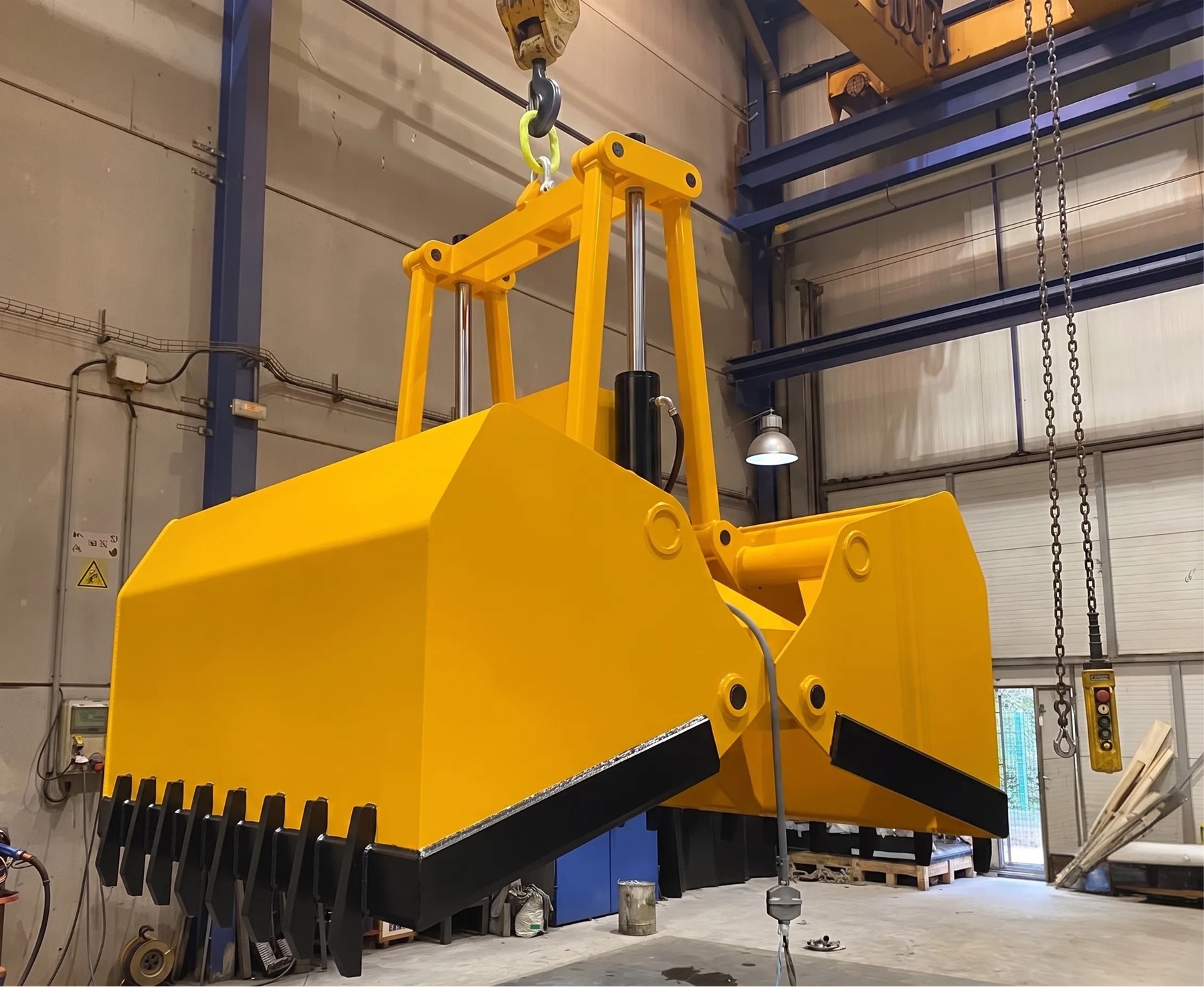
Clamshell
Grabs
Twin-shell grabs for coal, ore, clinker, fertiliser and other free-flowing bulk cargo — tight-closing wear-lined shells for clean discharge and minimal spillage at the quay.
View Clamshell Grabs →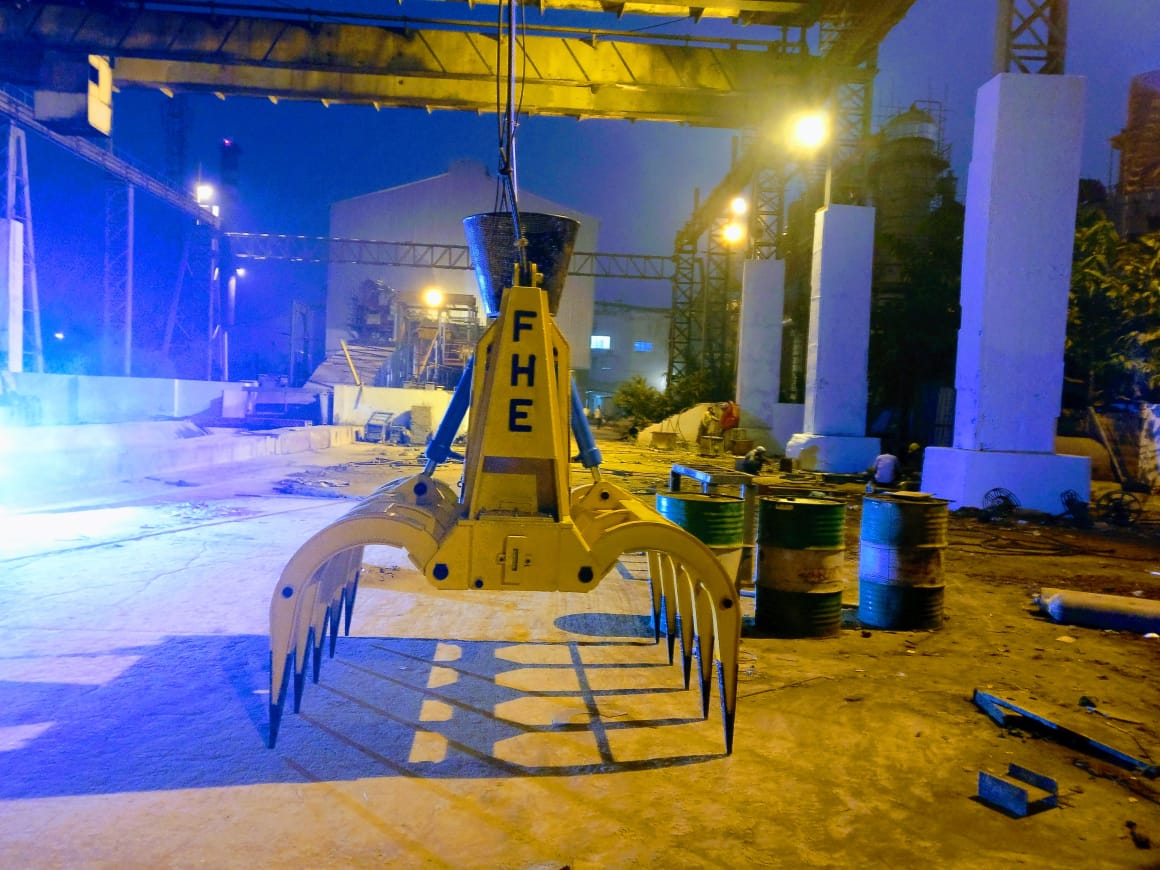
Hydraulic Grabs
— Full Range
The complete grab range across both families — custom volumes, rotator options, electro-hydraulic power packs for rope cranes, and rebuilds of existing units.
View All Hydraulic Grabs →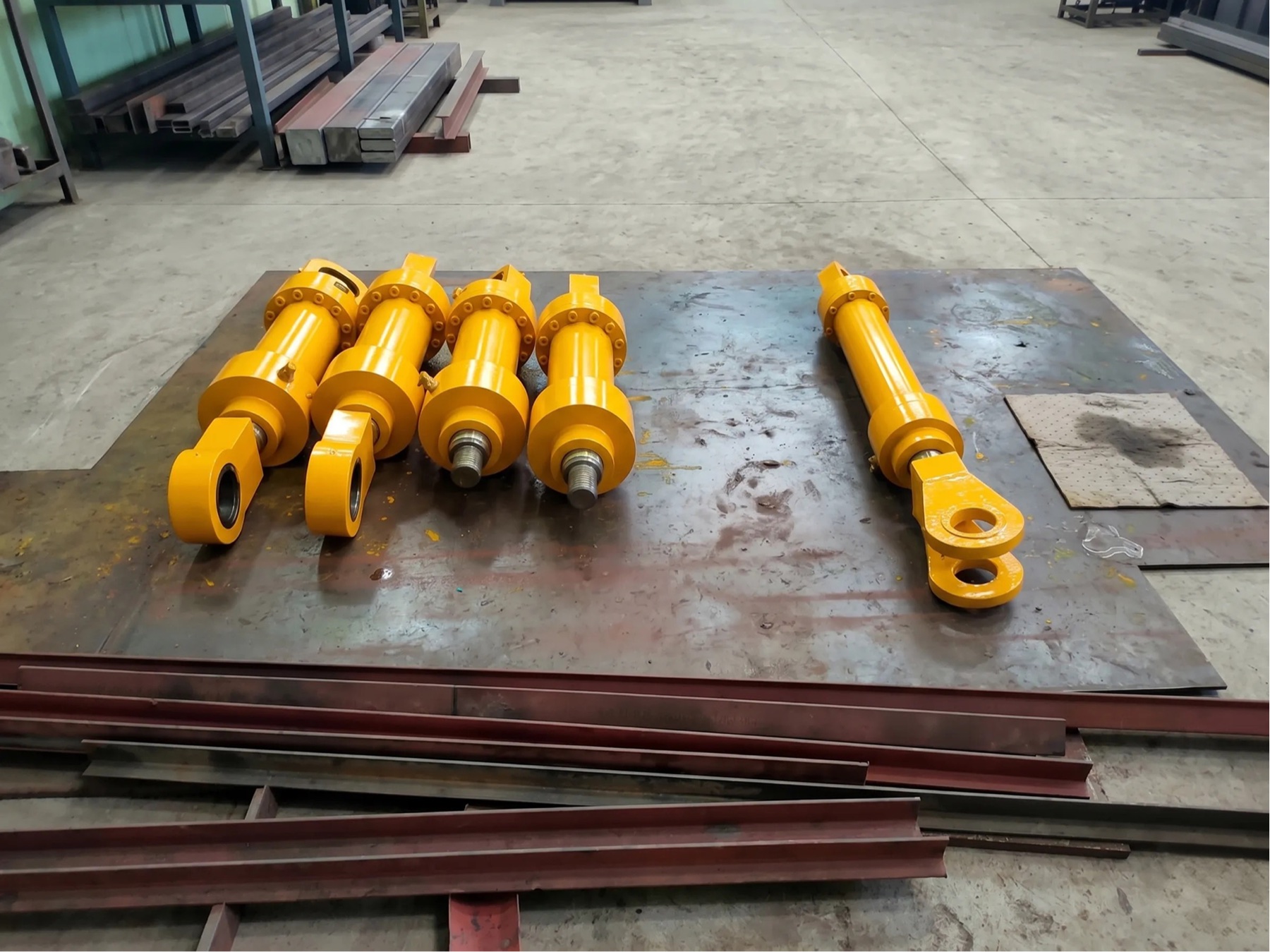
Hydraulic
Cylinders
Grab cylinders, balers, shear feeds and quay equipment actuation — hard-chromed rods, marine seal packages and 1.5× pressure testing on every unit.
View Hydraulic Cylinders →Two 10 m³ grabs,
working in nine days.
A refinery scrap yard on India's west coast needed to lift its scrap dispatch rate and could not afford a long changeover. We supplied a pair of 10 m³ orange peel grabs sized to the yard's existing cranes — closing force calculated for mixed ferrous scrap, Hardox tines, and marine-grade protection for the coastal atmosphere.
Both grabs were fully assembled, cycled and pressure tested at our works before dispatch, so site work was limited to suspension, hose-up and trials. From arrival at the yard to both grabs in production took nine working days, with our commissioning team on site through the first shifts. The yard's material movement is now paced by its cranes, not its grabs — which is where the constraint belongs.
From the quay wall
to the shredder line.
The same grab engineering serves the quay crane discharging coal, the yard handler feeding a shredder, and the plot crane at a shipbreaking beach. What changes is the volume, the tine geometry and the closing force — and those we size to your material and your carrier, not to a brochure.
Technical questions from
ports and scrap yards.
How do you size a grab to the material I handle?
Grab volume follows material bulk density and the crane's available lifting capacity. Light mixed ferrous scrap at roughly 0.4–0.8 t/m³ takes a large-volume orange peel grab; dense shredded scrap, or bulk cargo like coal or clinker, takes a smaller volume for the same rope pull. We calculate grab self-weight plus payload against your crane's safe working load at the working radius, and select tine or shell geometry for how the material actually behaves — penetrating a scrap pile is a different problem from closing cleanly in free-flowing bulk.
What marine-grade protection do you provide for port and coastal duty?
Salt atmosphere is the main killer of hydraulics at ports. Our marine-duty grabs run a multi-coat marine epoxy paint system, hard-chrome-plated cylinder rods with sea-air-rated seal packages, stainless or zinc-nickel plated fasteners and fittings, and sealed electrical connections on rotator and sensor circuits where fitted. Grease points are consolidated so daily lubrication actually gets done, and all hoses are rated and routed for UV and salt exposure.
Can your grabs be retrofitted to our existing cranes or material handlers?
Yes. We build to your carrier's interface — four-rope suspension for rope cranes, direct pin mounting for hydraulic material handlers and excavators, with the machine's own auxiliary circuit driving the grab, or an on-board electro-hydraulic power pack where the crane has no hydraulic supply. Send us the crane or handler model, its capacity at working radius and the suspension details, and we will confirm the mounting arrangement in the quote.
Do you repair or re-seal grabs from other manufacturers?
Yes. Cylinder re-sealing and re-chroming, tine repair and hard-facing, pivot pin and bush replacement, hose replacement and full structural refurbishment are all done at our Kundli works — for our own grabs and other makes, imported units included. For port and recycling operations we can stagger refurbishment so part of your grab fleet stays in service while units rotate through the shop.
What cycle times should I expect from a hydraulic grab?
The grab itself opens and closes in seconds; total cycle time is set by the carrier — hoist speed, slew or travel speed, and the distance between pick and discharge points. In a typical scrap yard arrangement a material handler with a well-matched orange peel grab sustains roughly 2 to 3 full cycles per minute through a shift. What the grab must contribute is a full bite every cycle and no waiting on hydraulics — which is why we size the closing force to the material rather than quoting a universal figure.
Moving scrap or
bulk cargo?
Tell us your material, your crane or handler, and your throughput target. Our engineering team will revert with a sized grab configuration and delivery schedule.