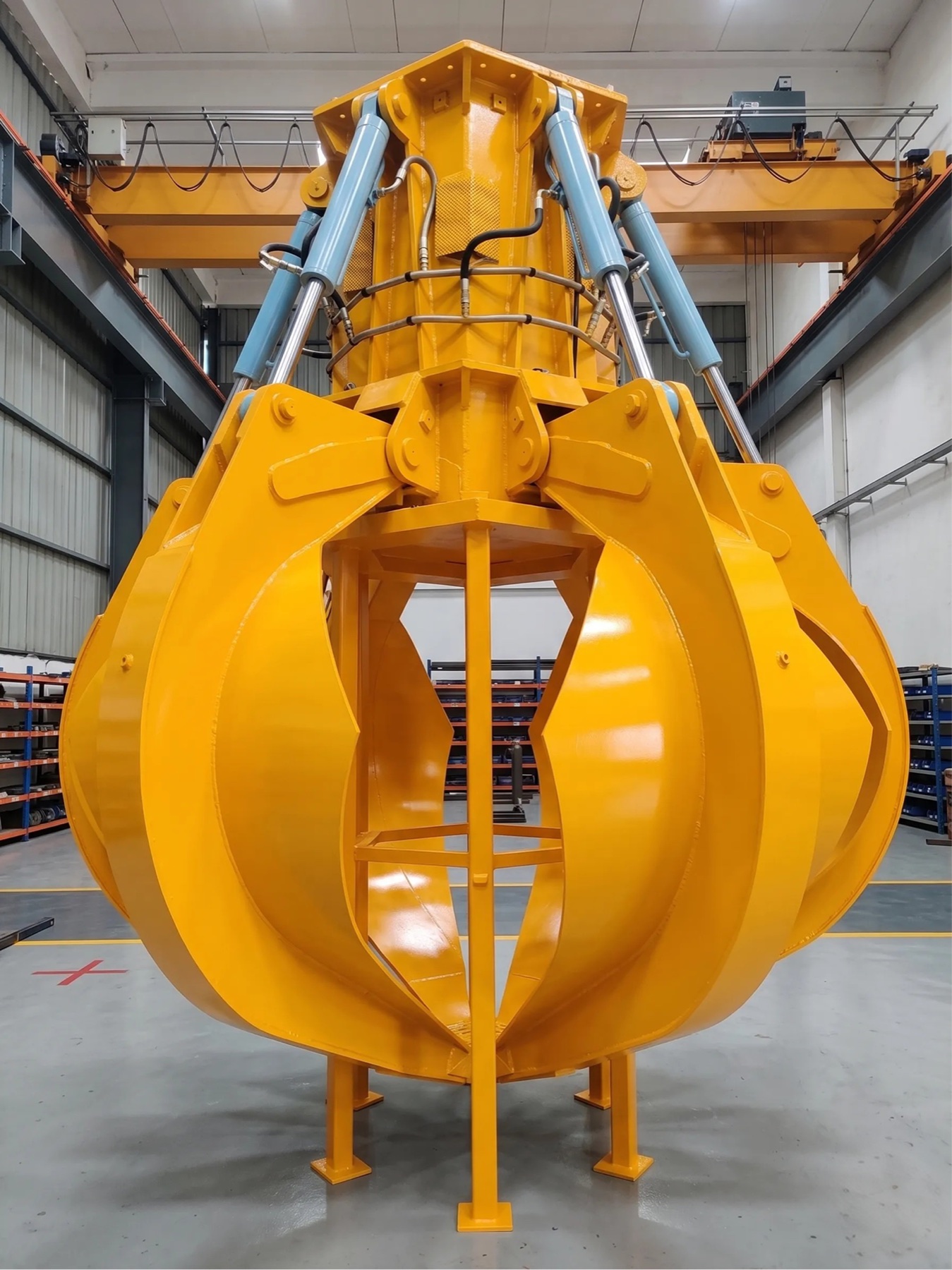
Hydraulic grabs built for the
materials they actually handle.
Orange peel grabs for scrap and irregular material, clamshell grabs for free-flowing bulk, and cane unloading grabs for sugar mill operations. Each grab is engineered to the material density, handling cycle and crane interface of your application.
A grab is only as
good as its match
to the material.
A grab sized for steel scrap will struggle with sugarcane. A grab built for free-flowing grain will fail on irregular metal pieces. The geometry, closing force and structural weight of a grab must be matched to the specific material it will handle.
Our engineering team sizes grabs to the actual material density and geometry, the crane lifting capacity, and the operating cycle. That is why our grabs deliver the throughput specified rather than the throughput estimated — the fill factor is designed in, not hoped for.
Every grab we manufacture is built from high-tensile structural steel with Hardox wear plates at high-impact surfaces, hydraulically tested before dispatch, and supplied with full as-built documentation. We also carry out grab repairs and refurbishment at our Kundli works.
Grab capacities across
material types.
The table below shows indicative capacity ranges by grab type and material. Exact sizing depends on crane SWL, required cycle time and material bulk density — share your application brief and we will confirm the recommended specification.
| Grab Type | Volume Range | Typical Material |
|---|---|---|
| Orange Peel — 4 Tine | 0.5 m³ to 4 m³ | Light scrap, demolition material |
| Orange Peel — 5 Tine | 1 m³ to 6 m³ | Medium scrap, mixed metal |
| Orange Peel — 6 Tine | 2 m³ to 10 m³ | Heavy scrap, slag, dense waste |
| Clamshell | 0.5 m³ to 8 m³ | Grain, sand, coal, ore, aggregates |
| Cane Unloading | 1 m³ to 5 m³ | Sugarcane bundles, green cane |
| Working Pressure | 160–250 bar | All types |
| Hydraulic Flow | 40–120 L/min | Depends on cycle time requirement |
Three grab types for
every material.
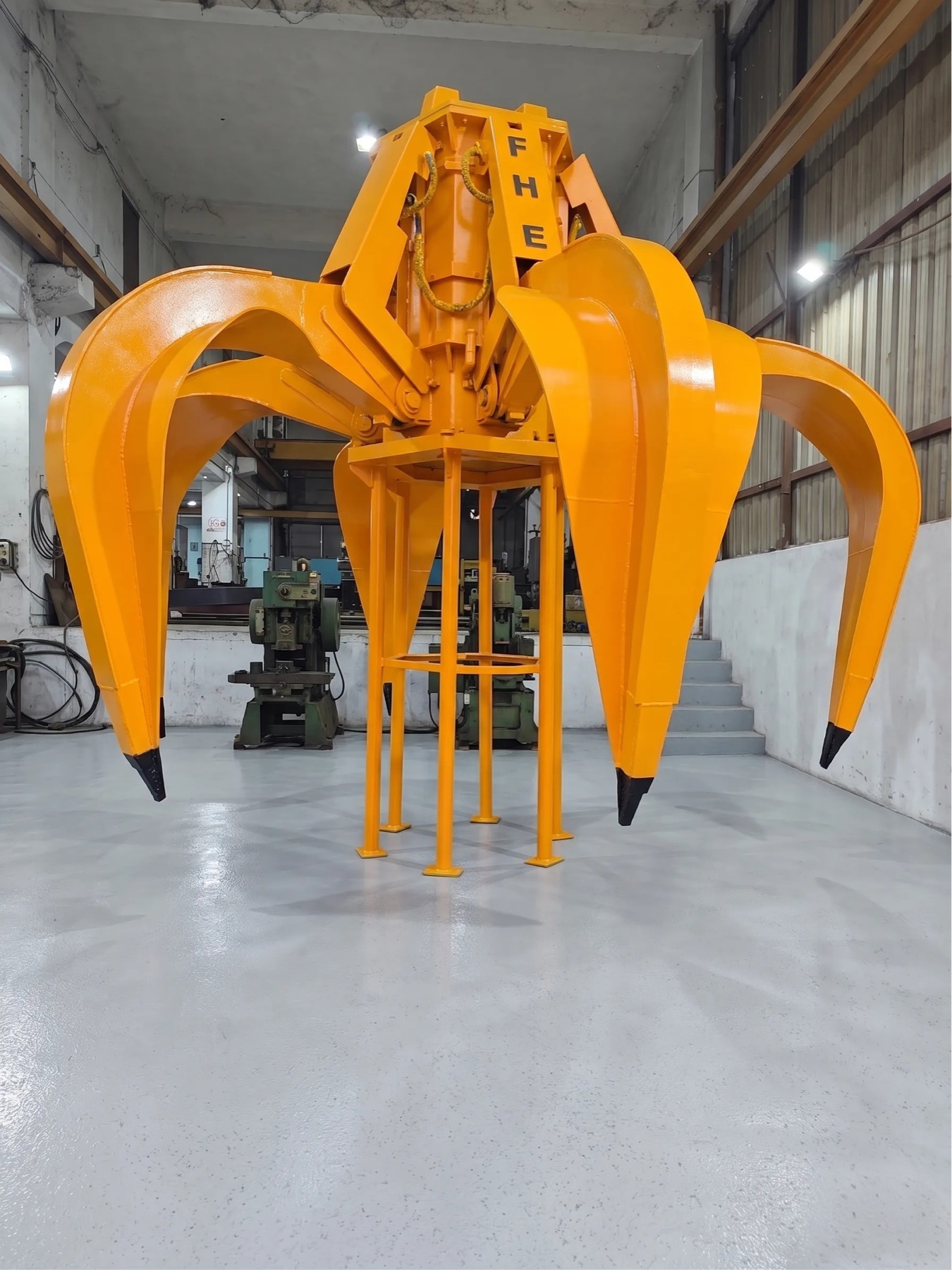
Orange Peel
Grab
Multi-tine grab geometry for handling scrap, demolition material, slag and irregular bulk loads. Available in 4-tine, 5-tine and 6-tine configurations to match material size and density.
View Orange Peel Grabs →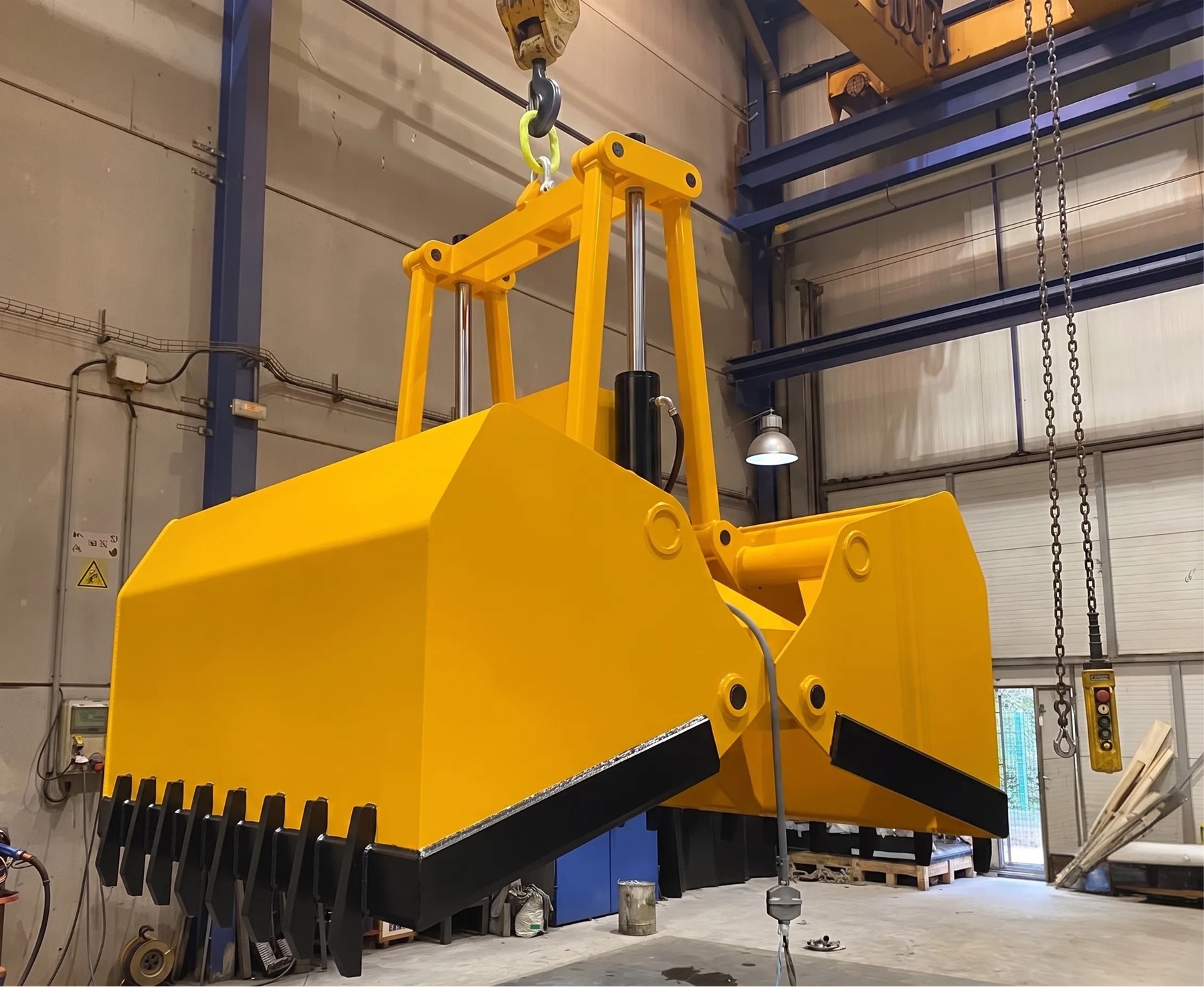
Clamshell
Grab
Twin-shell hydraulic grab for free-flowing bulk materials including grain, sand, ore, coal and aggregates. Optimised shell profile for high fill factors on each lift cycle.
View Clamshell Grabs →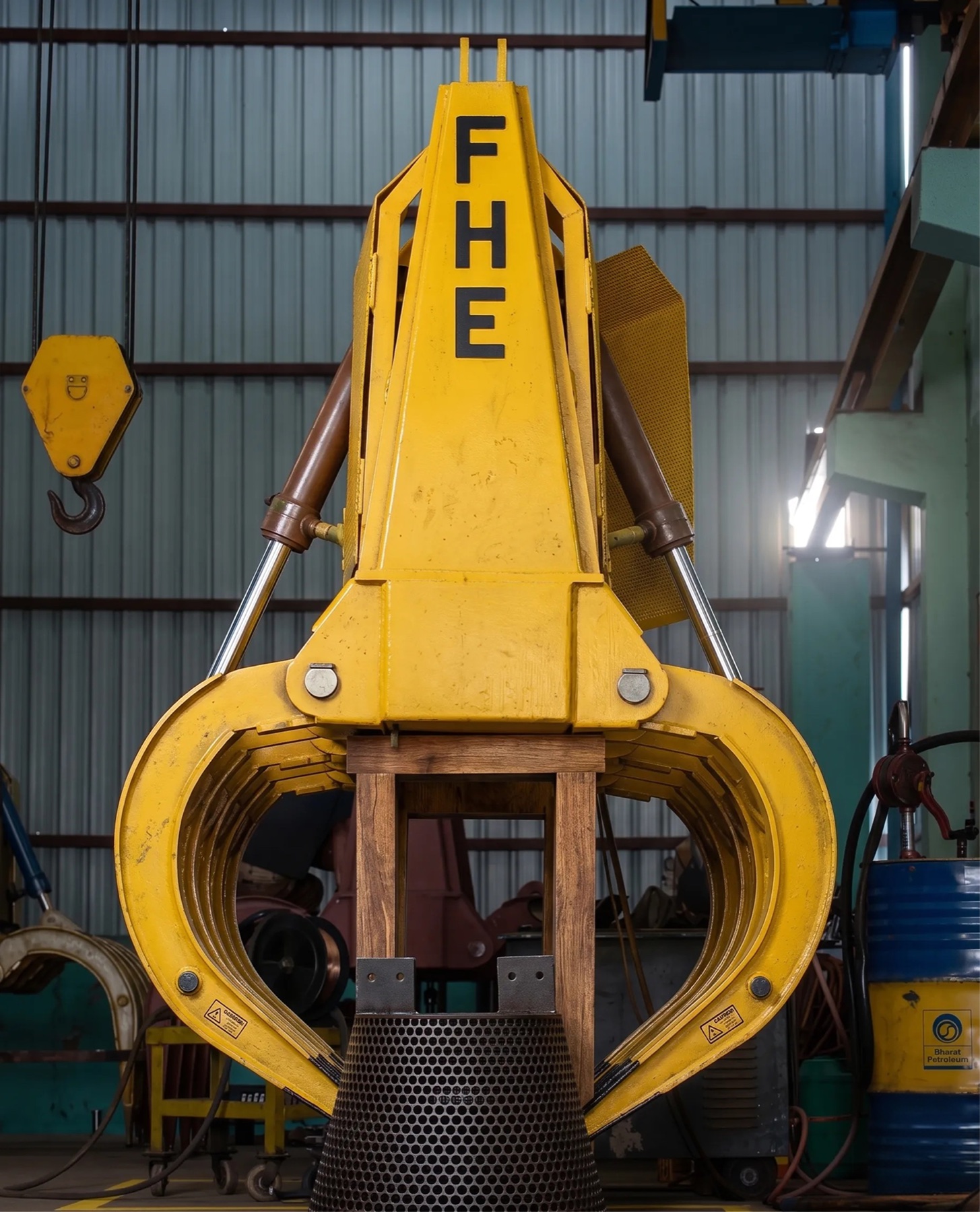
Cane Unloading
Grab
Purpose-engineered grab for sugarcane unloading at mill yards, sized to the bundle dimensions and trailer geometry typical of Indian sugar mill operations.
View Cane Unloading Grabs →Grabs operating
across Indian industry.
Engineering that
delivers the throughput
you specified.
Sized to material density, not guesswork
We calculate fill factor, payload and cycle time from the actual bulk density and geometry of your material — not from a generic density table that may not match your specific grade or moisture content.
Hardox wear surfaces as standard
High-wear contact surfaces are fabricated from Hardox 400 or 450 wear-resistant plate. This extends service life dramatically in abrasive applications like ore, scrap and slag — reducing maintenance frequency and total cost of ownership.
Hydraulic system matched to grab
The hydraulic cylinders, seals and actuation geometry are selected as a matched system — not assembled from whichever components are available. This ensures consistent closing force throughout the tine travel range.
Spare parts and repair support
We hold drawings for every grab we supply and manufacture replacement tines, shells, seals and structural wear parts. We also repair and refurbish grabs from other manufacturers at our Kundli works.
Technical questions
answered for
hydraulic grabs.
What is the difference between an orange peel grab and a clamshell grab?
An orange peel grab uses multiple tines that close around irregular material like scrap metal, demolition debris or slag — the tine geometry penetrates and grips material with no uniform shape. A clamshell grab uses two symmetrical shells that close like a jaw, ideal for free-flowing bulk materials like grain, sand, coal and ore. Choosing the wrong type typically results in low fill factors and poor throughput.
How is grab capacity calculated — what volume or tonnage should I specify?
Grab capacity must account for material bulk density and the crane's safe working load minus the grab's own dead weight. A 5 m³ clamshell handling coal at 0.8 T/m³ has a 4-tonne payload — the same grab on steel scrap at 2.0 T/m³ would exceed crane SWL at full fill. We size every grab to the material density, crane capacity and required cycle time so the system operates within safe limits at maximum productivity.
What steel grades do you use for grab construction and why does it matter?
We use high-tensile structural steel (IS 2062 Grade E350 and E410) for main structural members, and Hardox 400 or 450 wear plates for surfaces in contact with abrasive material. Using mild steel for wear surfaces in scrap or ore handling leads to premature wear, frequent repairs and short grab life. Our material selection is matched to the abrasiveness and impact severity of the application.
Can you supply replacement tines or wear parts for grabs from other manufacturers?
Yes. We manufacture replacement tines, shell liners, cylinder seals, pivot pins and structural wear parts for hydraulic grabs including those from other manufacturers. Share photographs and dimensions of the worn components and we will manufacture to match. We also carry out repair and refurbishment of worn grabs at our Kundli works.
What hydraulic pressure and flow does a hydraulic grab require?
Our hydraulic grabs typically operate at 160–250 bar working pressure with flow requirements of 40–120 litres per minute depending on grab size and required cycle time. If retrofitting a grab to an existing crane, share the hydraulic system specification and we will confirm compatibility or design an appropriate interface power pack.
What is the typical delivery lead time for a hydraulic grab?
Standard grab configurations are typically delivered within 4 to 8 weeks from order confirmation. Custom designs with non-standard dimensions, specialised materials or complex multi-tine geometry may require 8 to 12 weeks. We provide a firm delivery schedule after reviewing the full specification.
Specify a grab to
your material
and crane.
Share the material type and density, the crane capacity it will be used with, and your typical cycle time. We will recommend the right grab geometry and capacity and revert within 24 hours.