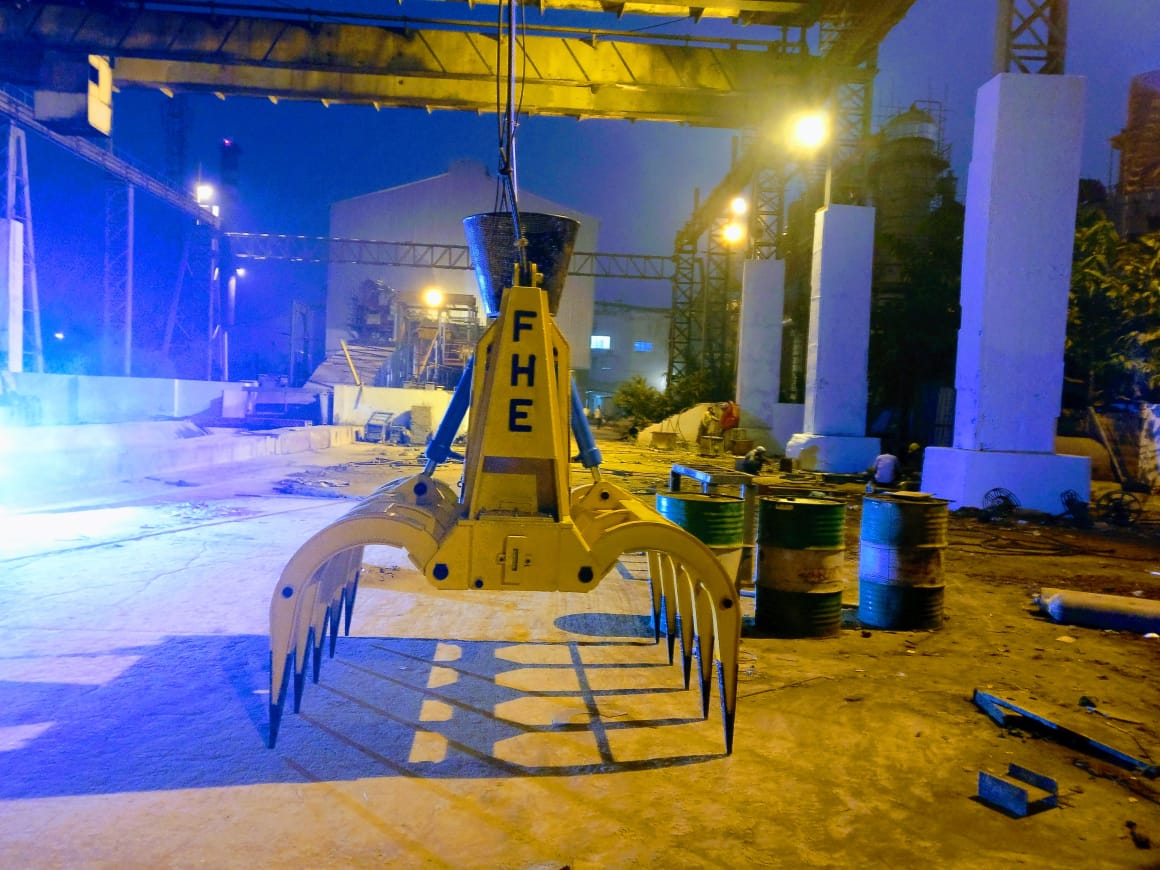
10 m³ orange-peel
grab pair,
refinery scrap yard.
Two heavy-duty orange-peel grabs for mixed ferrous scrap from decommissioned tankage at a west-coast oil refinery — engineered around the customer's existing 50 t EOT crane and commissioned on site in nine working days.
Heavy scrap,
an existing crane,
and no room for error.
In 2023, a west-coast oil refinery in Gujarat began clearing mixed ferrous scrap generated by the decommissioning of old tankage. The material was as unforgiving as scrap gets: plate sections, cut structural members and irregular tank shell pieces, in a yard that needed to keep moving material daily.
The constraint that shaped the whole project was the crane. The refinery already operated a 50 t EOT over the scrap yard and had no intention of replacing it. Whatever handled the scrap had to hang from that hook — which fixed the ceiling on combined grab weight and payload, and fixed the duty environment the grabs had to survive.
The refinery needed two units, not one: a working grab and a second unit so that scrap movement never stopped for maintenance. And because the yard was inside an operating refinery, the site-work window for installation and commissioning was short and tightly controlled.
Project
specification.
| Location | West-coast oil refinery, Gujarat |
|---|---|
| Year | 2023 |
| Equipment | Heavy-duty orange-peel grabs — two identical units |
| Grab Capacity | 10 m³ per unit |
| Material Handled | Mixed ferrous scrap from decommissioned tankage |
| Host Crane | Customer's existing 50 t EOT crane (retained, not in Fluidline scope) |
| Duty Class | A6 |
| Tine Pivots | Forged pivot construction |
| Site Commissioning | Both units commissioned in nine working days on site |
| Scope | Design, manufacture, testing, site installation and commissioning |
Engineered around
the crane, not
the other way round.
- Grab weight budgeted against the 50 t hook. Dead weight plus a full 10 m³ payload of dense mixed scrap was sized to stay within the existing crane's rated capacity with margin — the crane was the fixed constraint, so the grab design flexed around it.
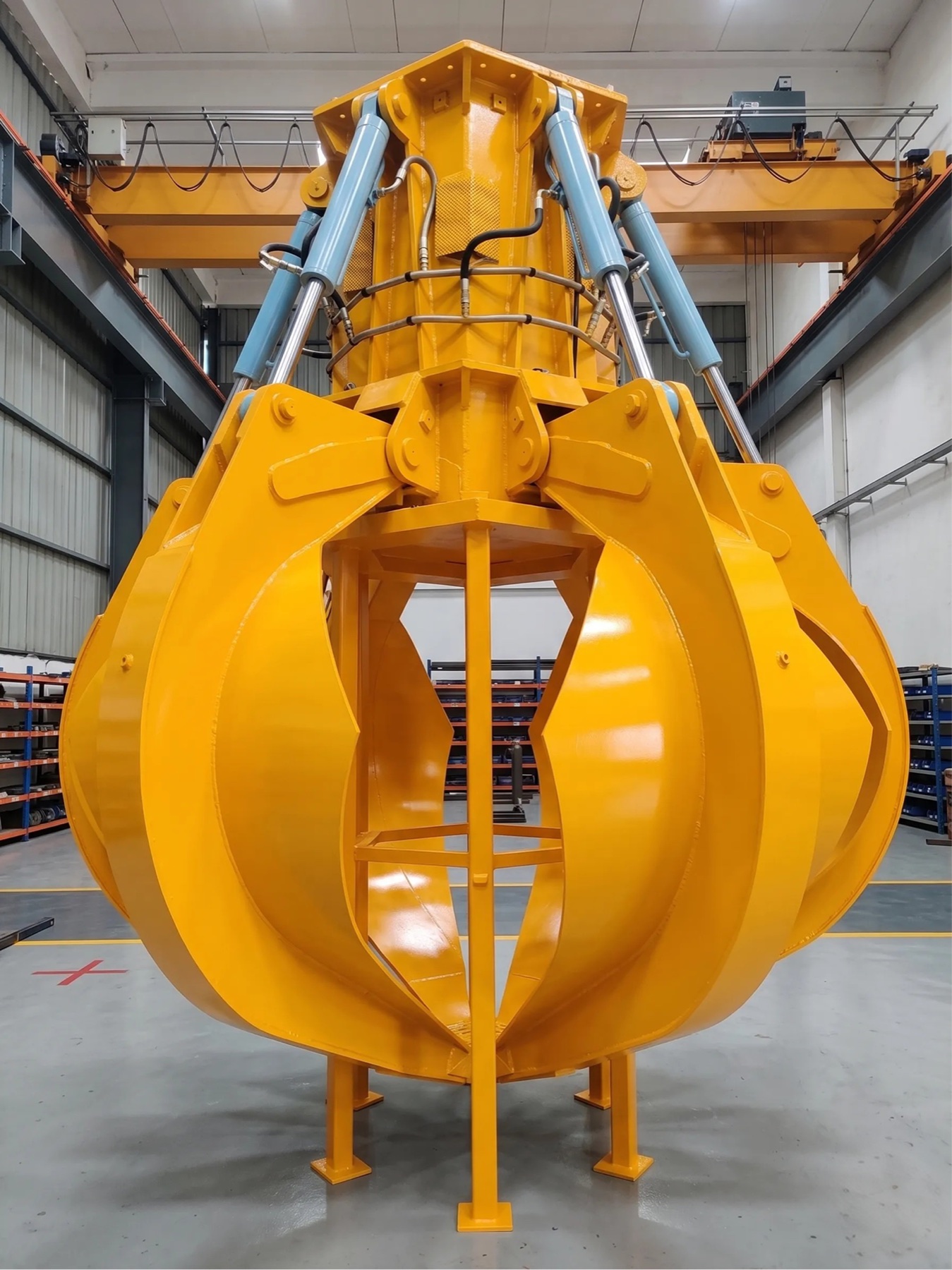
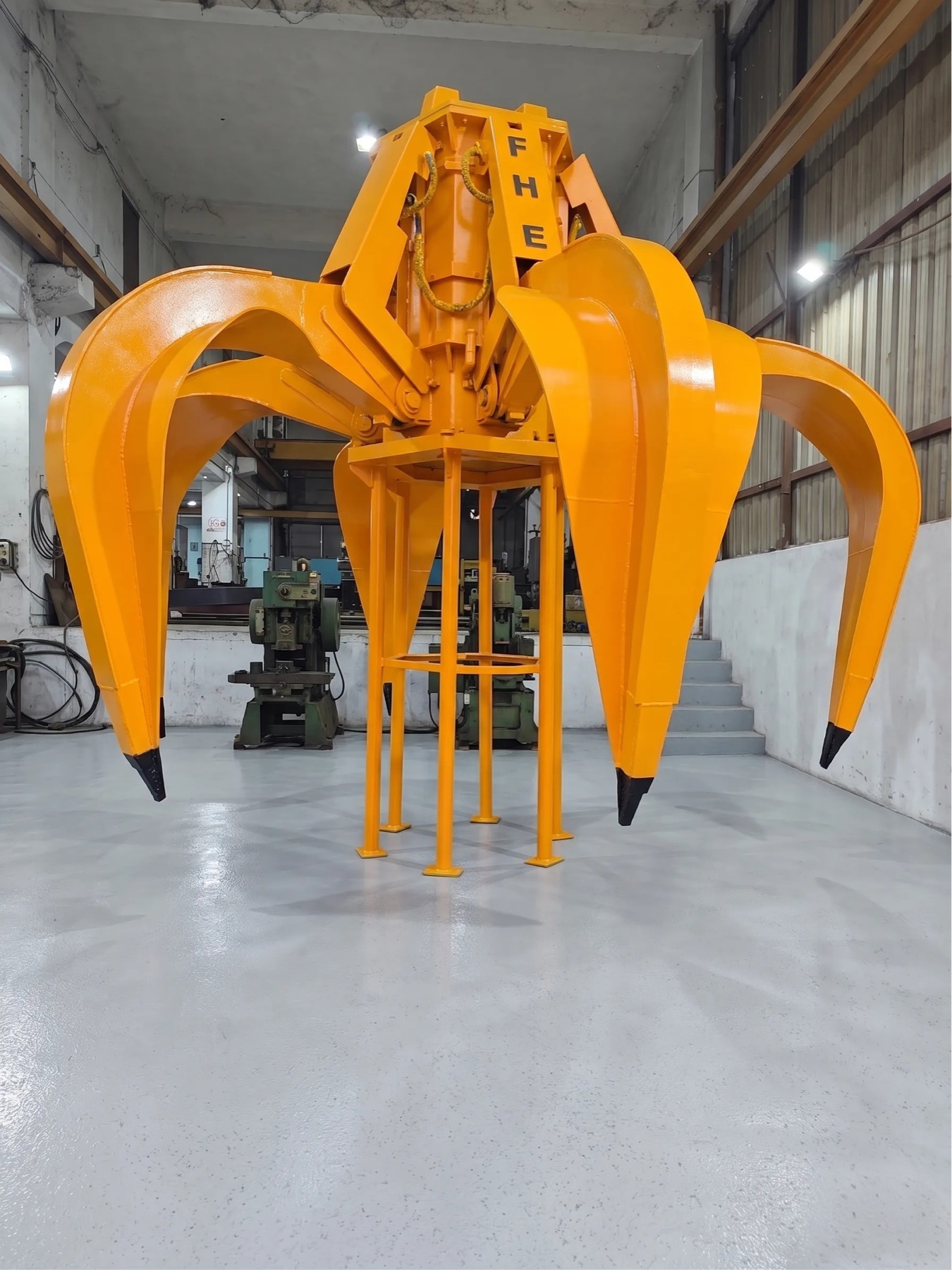
- Orange-peel geometry over clamshell. Irregular plate and structural scrap does not sit in a clamshell. Multi-tine orange-peel closure penetrates and contains mixed tankage scrap far more reliably per cycle.
- Forged tine pivots. Pivots are the fatigue-critical detail on a scrap grab at A6 duty. Forged pivot construction was specified over fabricated assemblies for service life under daily cycling.
- Two identical units. Building the pair to one drawing set means either grab hangs from the crane interchangeably and a single spares inventory covers both — the yard never stops for grab maintenance.
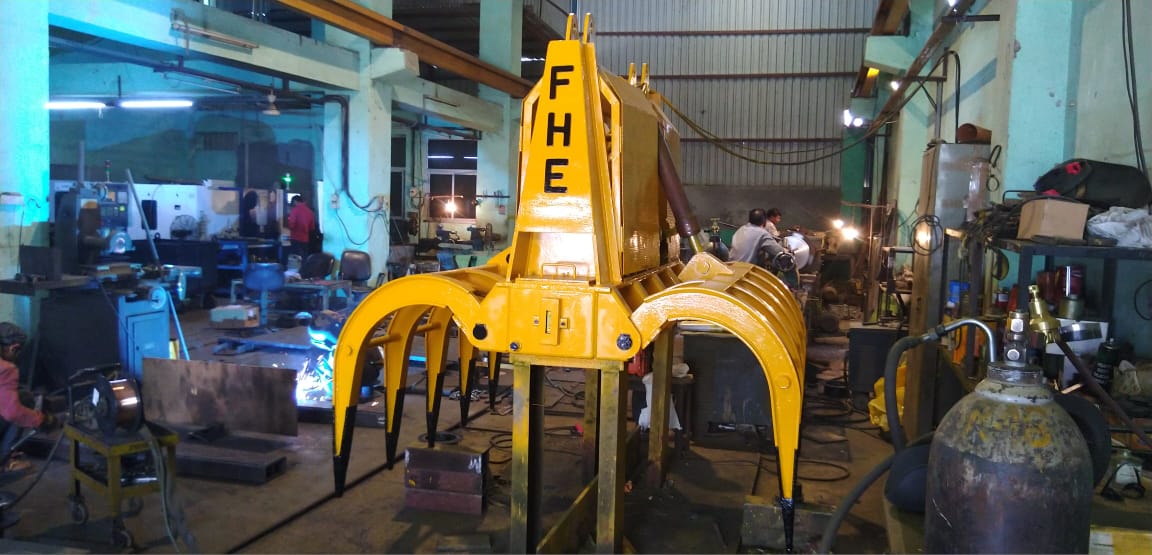
- Full assembly and testing at Kundli first. Both grabs were built, cycled and function-tested at our works before dispatch, so the refinery site window was spent on installation and load trials, not on fault-finding. That is what made nine working days achievable.
Both units in,
on time, and
still cycling.
Both grabs were installed and commissioned inside the nine-working-day site window, on the customer's existing crane, with no modification to the crane itself. The pair has run the yard's daily scrap movement since handover.
Across the first year of operation the installation recorded better than 99% uptime — the second unit and the common spares kit meaning that routine tine and seal maintenance never interrupted scrap dispatch from the yard.
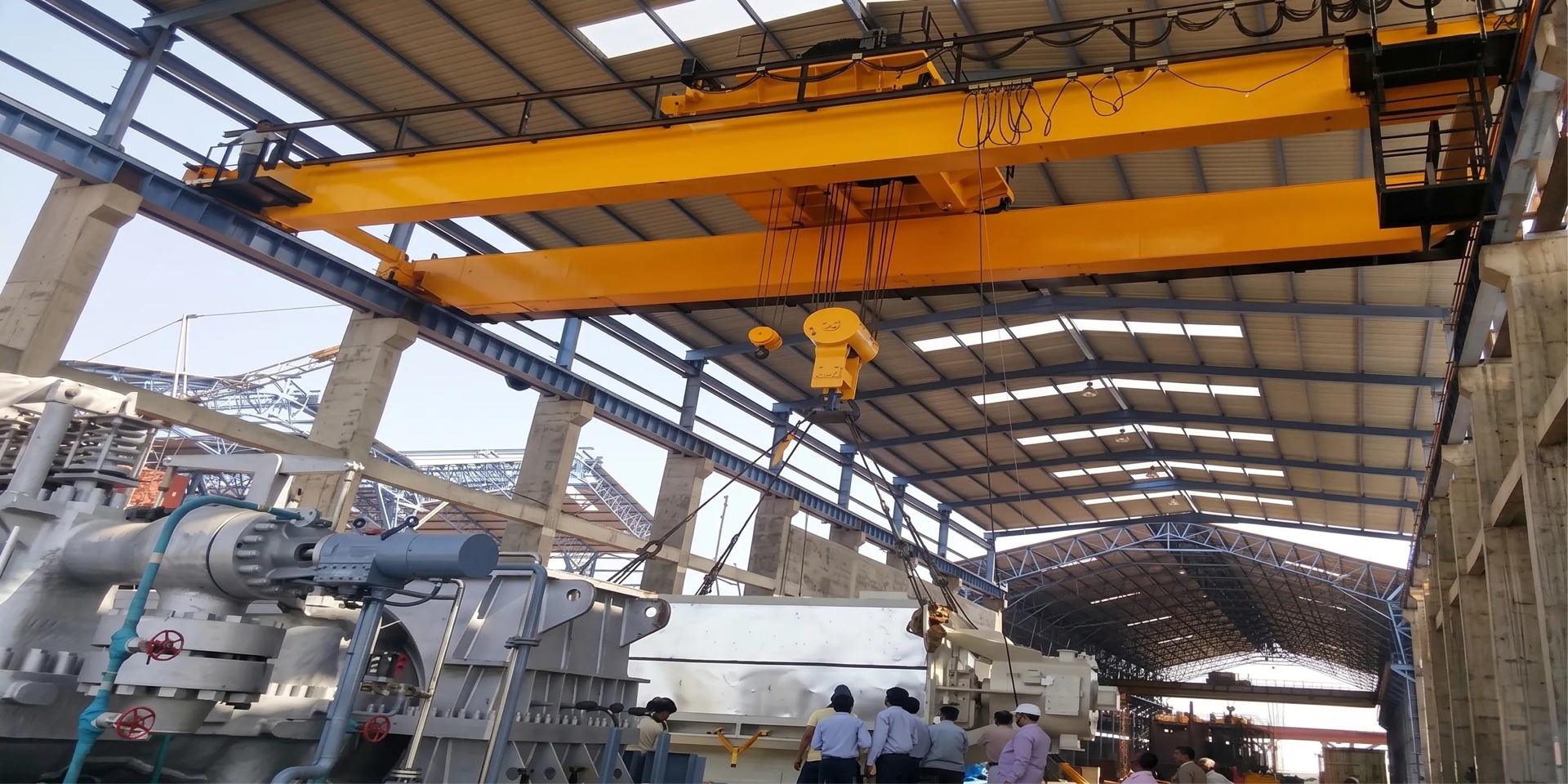
The grabs, on the ground.

Have a similar
duty cycle in
your yard?
Tell us your crane capacity, material mix and daily tonnage. We will engineer the grab around the equipment you already own — the way we did here.