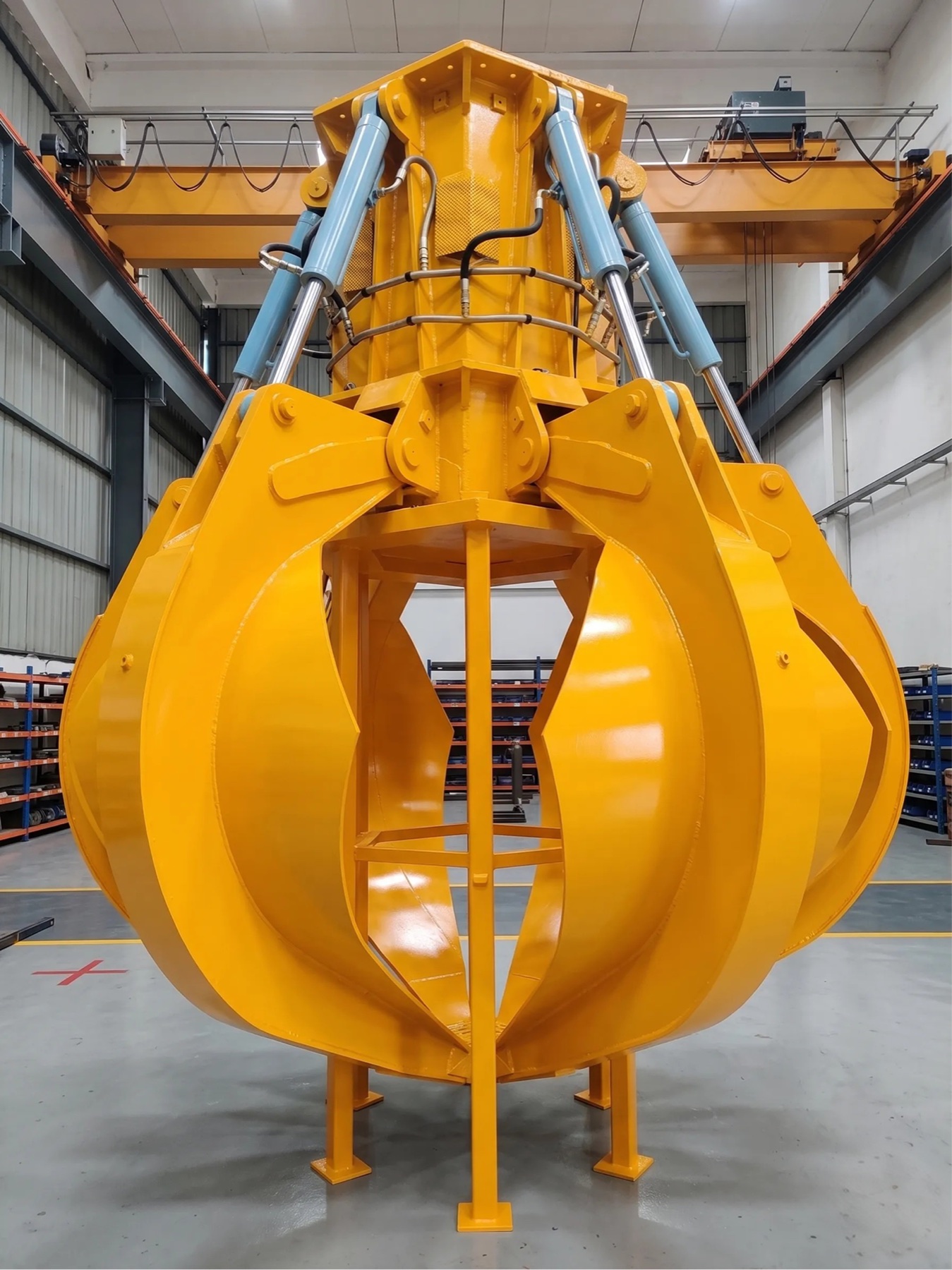
Orange-peel grab
retrofit on an existing
scrap-yard crane.
A recycling yard's crane was sound; the grab hanging from it was not. Fluidline engineered a replacement grab, rotator and hose set matched to the crane's lifting capacity and hydraulic supply — with Hardox 400 tines and a spares kit in the same delivery.
A good crane
let down by
a failed grab.
A recycling yard in north India came to us with a familiar problem. Their crane was in good condition and had years of service left in it — but the grab it carried, supplied by another manufacturer, had failed well before the end of its expected life. The yard was moving scrap on borrowed time and did not want to buy a new crane to fix a grab problem.
A retrofit like this is a matching exercise before it is a fabrication exercise. The new grab, its rotator and its hose set all had to work within what the existing crane could give: its lifting capacity on one side of the equation, and the flow and pressure of its existing hydraulic supply on the other. Get either wrong and the yard inherits a new set of problems.
The customer also wanted what they had not had the first time: a grab built for the abrasion of daily scrap work, and spares on the shelf so that wear maintenance never turned into downtime again.
Project
specification.
| Location | Recycling yard, north India |
|---|---|
| Sector | Scrap processing and recycling |
| Scope of Supply | Orange-peel grab, rotator, hose set and spares kit |
| Host Crane | Customer's existing scrap-yard crane — retained, no replacement |
| Capacity Matching | Grab sized to the crane's rated lifting capacity |
| Hydraulic Matching | Rotator and grab circuit matched to the crane's existing hydraulic supply |
| Tine Material | Hardox 400 |
| Context | Replacement for an earlier grab that failed prematurely |
| Spares | Wear and seal spares kit supplied with the unit |
Match the crane.
Fix the failure.
Stock the spares.
- Retrofit, not replacement. The crane had service life left, so the engineering effort went into working within its limits — grab dead weight plus payload budgeted against the crane's rated lifting capacity, with the crane itself untouched.
- Hydraulics matched to the existing supply. The rotator and grab circuit were specified around the flow and pressure the crane's hydraulic system already delivered — no power pack replacement, no re-plumbing of the crane, no surprises at commissioning.
- Failure points of the old grab designed out. We examined how and where the previous grab had failed, and addressed those specific weaknesses — structure, pivots and wear surfaces — in the replacement design rather than repeating the pattern that had already failed once.
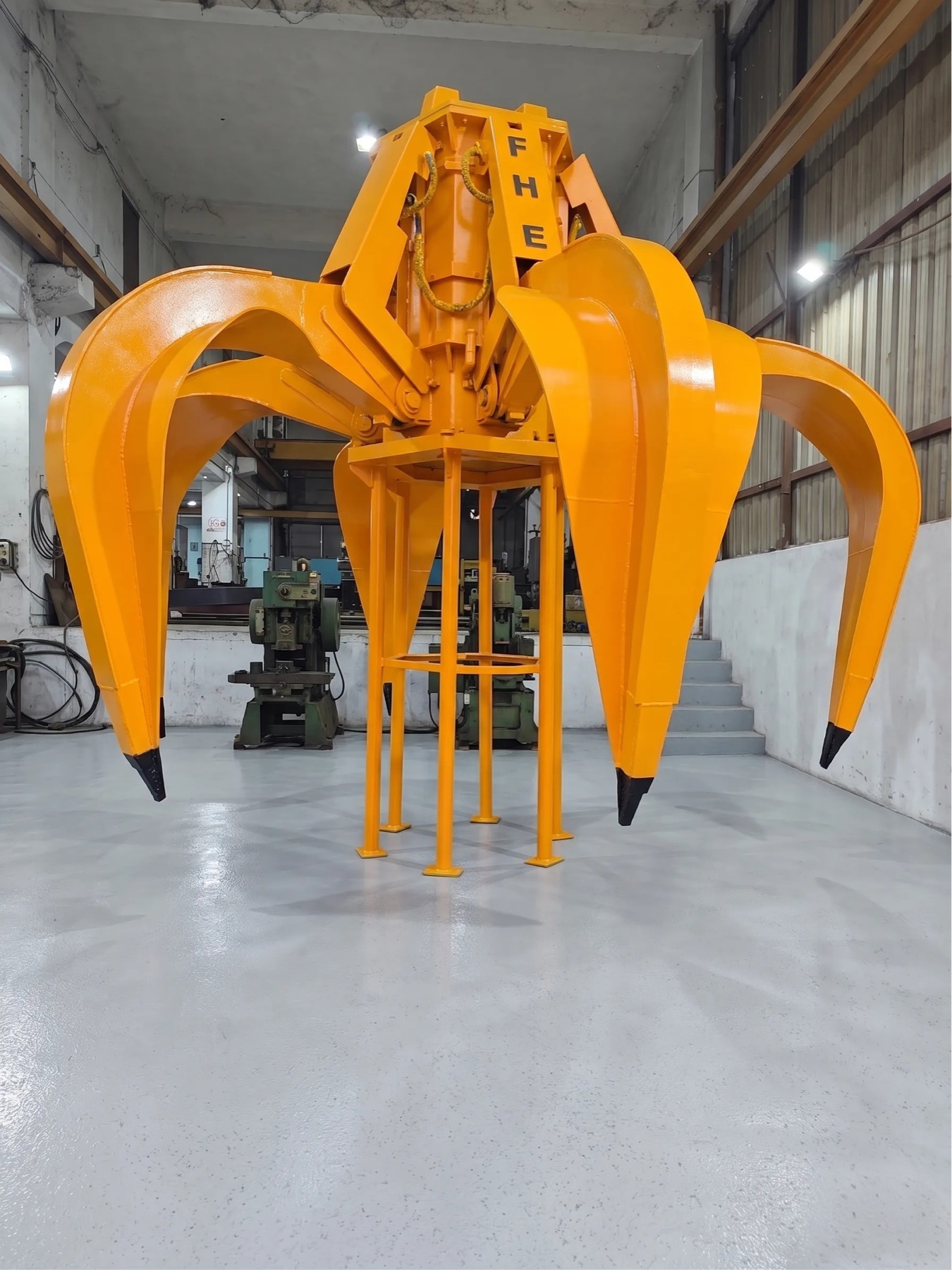
- Hardox 400 tines. Daily mixed-scrap work grinds ordinary steel away. Hardox 400 tines carry the abrasion resistance the duty demands, so tine life is measured in seasons rather than months.
- Spares kit shipped with the grab. Wear and seal spares were supplied in the same delivery, so routine maintenance is a stores withdrawal, not a procurement cycle with the grab standing idle.
The yard kept
its crane — and
lost its problem.
The grab, rotator and hose set were delivered as a matched package and fitted to the customer's existing crane. The yard avoided the capital cost of a crane replacement, and the grab that had been the weak link in the operation was replaced by one engineered for the duty.
With Hardox 400 tines and the spares kit on the shelf, the yard's wear maintenance is now planned work rather than emergency response.
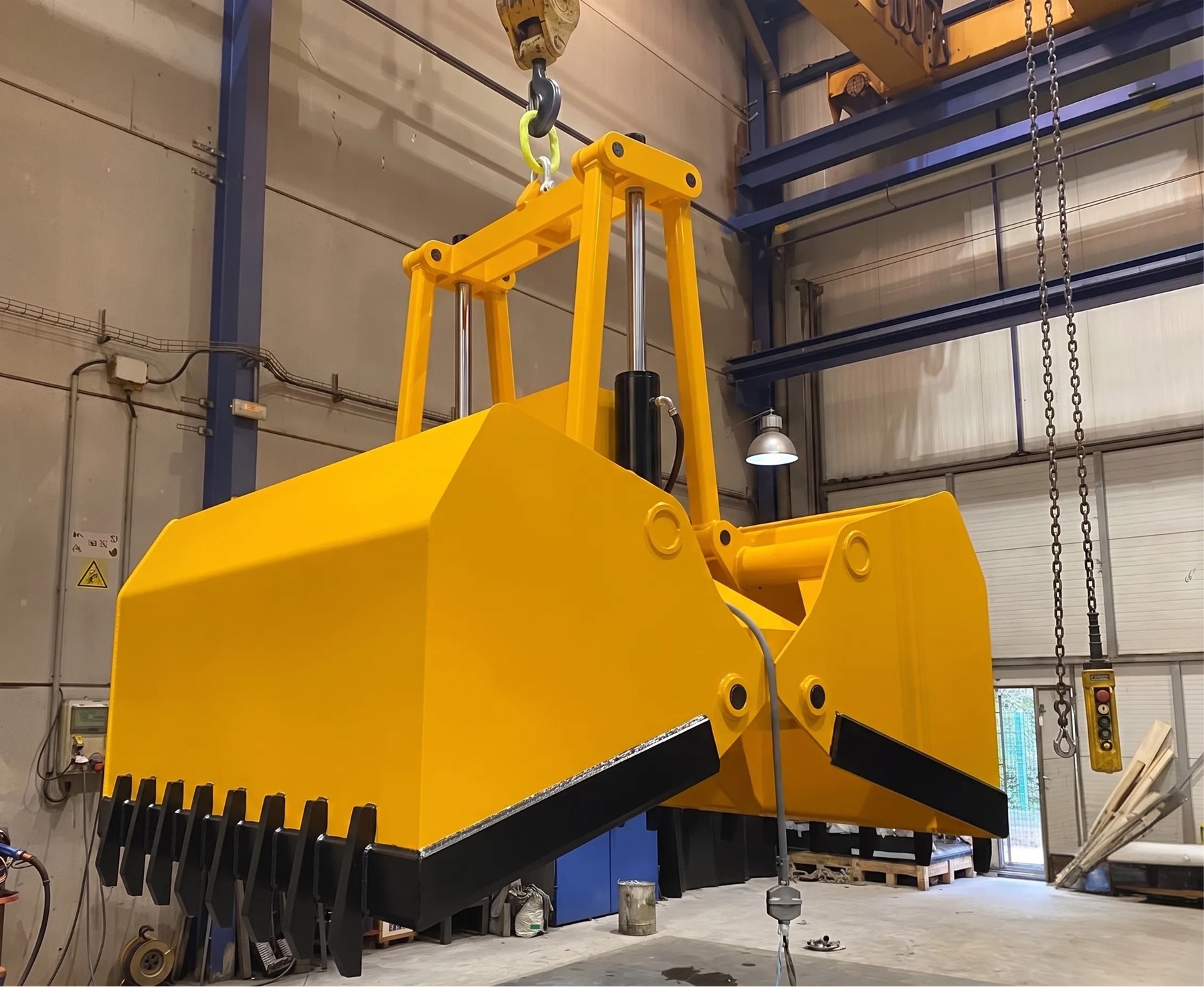
The grab, up close.

Have a similar
duty cycle on
your crane?
If your crane is sound but your grab is not, send us the crane's capacity and hydraulic details. We will engineer the attachment to match what you already own.